Loading…
Venue: Statehood hall: Martynas Mažvydas National Library of Lithuania clear filter
arrow_back View All Dates
Tuesday, October 20
 

11:00am EEST

Discovering "L’Assedio Dei Sogni, The Siege of Dreams”
Tuesday October 20, 2026 11:00am - 11:30am EEST
I work with a small not-for-profit reissue label called Recordiana, dedicated to discovering and digitising out-of-print South African recordings where master tapes no longer exist. Through this work, I recently became involved in the rediscovery of a piece of music, an original war time composition, that had not been heard for over 80 years.

The story begins with my partner in Recordiana, Rob Allingham, a long-time music archivist and record collector (formerly archivist at Gallo Record Company). In the 1990s he purchased a large box of South African 78rpm shellac records at an estate auction. 

Among them were ten mysterious white-label test pressings with handwritten notes referencing “Zonderwater 1946” and “Gallo (Pty) Ltd”.

Zonderwater was the biggest Prisoner of War detention camp built by the Allies during World War II. Located 43 kms east of Pretoria, South Africa, more than 100,000 Italian soldiers captured by the British on the North and East Africa fronts were interned at Zonderwater from April 1941 to January 1947.

Following the precepts of the Geneva Convention to the letter, the South African camp management focused on the humane treatment of their captives, and the camp developed into a productive and creative hub with POWs engaged in numerous activities in the endless fight against boredom and depression. Musical performance was a key part of these activities. (Dr Donato Somma, University of the Witwatersrand, 2007.)

Through our research we have determined that in December 1946, three of the most prominent musical talents in the camp, Mino Martucci, a renowned violinist in Italy prior to the war, pianist Davio Almangano and composer Raoul Maccari recorded ten performances for recording engineer, John Hecdt of the Gallo Recording Company.

Nine of the recordings are light classical pieces such as 'Capresse Viennoise' and 'Nocturne in E Flat’ made popular in the 1920s and 30s by the likes of Fritz Kreisler and Yehudi Menuhin. The other two recordings are solo piano pieces played by Davio Almangano - including the recording of an original composition for piano: a piece identified with a note on the sleeve as 'composed in captivity' called 'L'Assedio Dei Sogni’ (The Siege of Dreams), composed by a POW named Raoul Maccari.

This specific composition and recording has never previously been heard, nor was any information
about the recording session ever documented, as these recordings were never issued for commercial release by the company and the 10 shellac "test pressing" 78” RPM discs remained in the private collection of the recording engineer until his death in the 1980s.

This presentation will offer an opportunity for delegates to hear the remarkable story of how these specific recordings were recently re-discovered, digitised and preserved for future generations through the work of Recordiana and the ILMC (Institute of Concentrationary Musical Literature) foundation in Italy - and an opportunity to hear, for the first time, an original composition performed and captured in the Zonderwater POW camp in 1946: "L’Assedio Dei Sogni, The Siege of Dreams.”

The presentation was successfully delivered at the International Association of Music Libraries, Archives and Documentation Centres (IAML) conference in 2024 (Stellenbosch, South Africa) on a panel chaired by Ferenc Janós Szabó (Institute for Musicology of the Hungarian of Sciences and the Liszt Ference Academy of Music)
Speakers
avatar for Duncan John Shelwell

Duncan John Shelwell

Partner, Recordiana
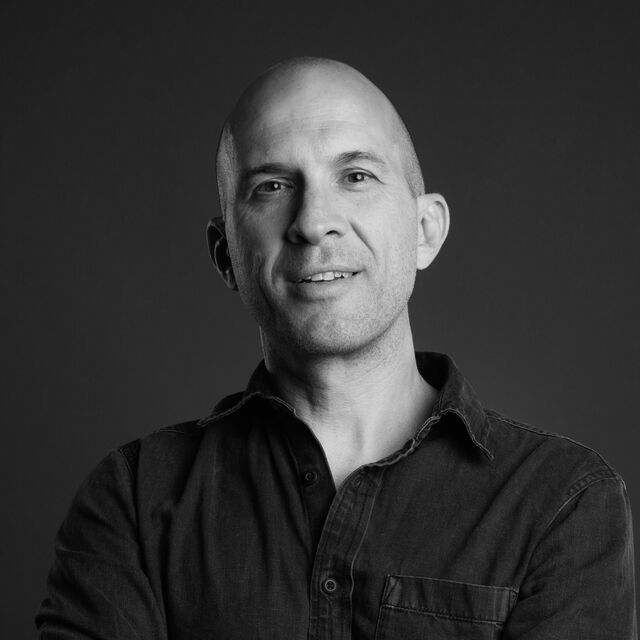
Duncan John Shelwell is a practicing and published photographer, music curator and researcher, currently working and exhibiting in Cape Town, South Africa.He is a partner in RECORDIANA  https://recordiana.bandcamp.com a non-profit record label and music consultancy digitising out-of-print South African recordings. Previously, he was head of catalogue at Sony Music Africa until 2018, before that working at Gallo Record Company, Africa’s oldest independent label from 2005... Read More →
Tuesday October 20, 2026 11:00am - 11:30am EEST
Statehood hall: Martynas Mažvydas National Library of Lithuania

11:30am EEST

From Loss to Resilience: Safeguarding Bangladesh’s Audiovisual Heritage in Times of Crisis
Tuesday October 20, 2026 11:30am - 12:00pm EEST
This presentation examines the challenges and opportunities of safeguarding audiovisual heritage in Bangladesh, a context shaped by historical loss, environmental vulnerability, and limited archival infrastructure. It takes as a starting point the legacy of Hiralal Sen, one of the earliest filmmakers in South Asia, whose pioneering works were largely destroyed by fire. This early loss highlights the fragility of audiovisual memory and the long-standing absence of systematic preservation practices in the region.

Building on this historical case, the paper explores contemporary risks facing audiovisual archives in Bangladesh, including climate-related threats such as flooding and humidity, resource constraints in archival institutions, and the vulnerability of independent and community-based collections. Particular attention is given to the preservation of materials that document marginalized voices, including grassroots movements, indigenous communities, and socially engaged media practices, which are often at risk of neglect or erasure.

The presentation also addresses emerging concerns regarding the authenticity and integrity of audiovisual records in the digital era. With the growing influence of artificial intelligence and the spread of manipulated media, ensuring the reliability of archival materials has become increasingly complex, especially in contexts with limited technological capacity.
In response to these challenges, the paper proposes practical and scalable strategies for resilience, including low-cost digitization, community-led archiving initiatives, capacity-building programs, and regional collaboration. It argues that safeguarding audiovisual heritage in Bangladesh requires an approach that integrates local knowledge with global best practices.

By situating Bangladesh within broader discussions of archives in times of peace and crisis, this presentation contributes to ongoing efforts to protect memory, identity, and authenticity in vulnerable archival contexts.
Speakers
avatar for Smita Barua

Smita Barua

Sub Assistant Engineer, Member
Sub-Assistant Engineer | Digital Archiving & Document Control Specialist
 Dhaka, Bangladesh
📞 +88-01744272336
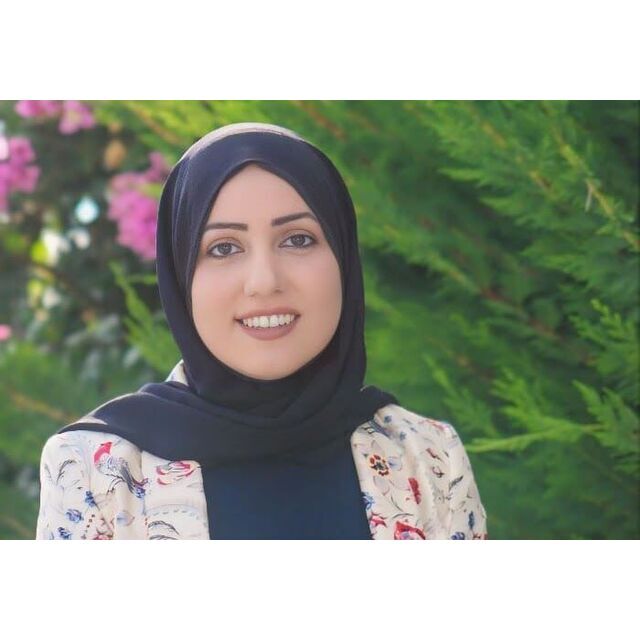
📧 [email protected]PROFESSIONAL PROFILESenior audiovisual archive and digital preservation professional with 14+ years of experience in national-level film archiving... Read More →
Tuesday October 20, 2026 11:30am - 12:00pm EEST
Statehood hall: Martynas Mažvydas National Library of Lithuania

12:00pm EEST

Relistening for Aural Justice: The Case of Alternative Community Radio in Ukraine
Tuesday October 20, 2026 12:00pm - 12:30pm EEST
“They were singing about burning churches and the churches are burning now” 
 (20ft radio host, interview, 2022). 
 
Russia’s full-scale invasion of Ukraine has exposed the fragility of both material and living memory: destroyed archives and libraries, killed artists, knowledge from the occupied territories cut off from information exchange. In an almost instantaneous grassroot response, local musicians and music lovers joined broader shifts to preserve – but also search for gaps in Ukrainian cultural memory and history.

This presentation, based on broader fieldwork with online community radio practitioners in Ukraine, explores how such alternative sound media offers ways to listen to both the more distant and immediate pasts. From the re-releases of the niche 90s new wave and post-punk recordings to podcasts on Ukrainian poetry; rediscovering folklore music tradition; or archival recordings from the national radio and television studios, hosts and DJs recontextualise various aural traditions in contemporary popular and electronic music culture. By becoming an ad-hoc archive, and a platform to recontextualise historical recordings and musical traditions, analysed stations engage with two questions: how can the lesser explored pasts of Ukrainian music – and its absence in the mainstream public memory – connect the systematic epistemic pressure from the imperial centre(s) with the war; and how can the aural side of life at war be remembered in the future.

Read through Carolyn Birdsall’s notion of “earwitnessing”, Gascia Ozunian study of sonic memories of Armenian genocide survivors, Ana Maria Ochoa Gautier’s decolonial approach to the aural epistemologies, Maria Sonevytsky’s work indigenous archival silences in Crimean War, and Diana Taylor’s critique of an object-centric archival practices, I argue that such animation of a sonic memory is a way to relisten to the past from the wartime perspective in search for the useful knowledge – and a practice of sound-based epistemic justice seeking.
Speakers
IG

Ieva Gudaitytė

Doctoral Research Fellow, University of Oslo
Dr Ieva Gudaitytė is a music, sound, and media researcher at the University of Oslo. Her recently defended doctoral work, Listening to War Through Community Radio in Ukraine and Beyond investigates the aural politics of alternative sound media communities in Ukraine and their partners across Eastern and Central Europe. Following her previous research and current involvement in the independent community radio scene in the region, her practice operates on the inte... Read More →
Tuesday October 20, 2026 12:00pm - 12:30pm EEST
Statehood hall: Martynas Mažvydas National Library of Lithuania

1:30pm EEST

Archived Sounds of World War I Prisoners from Serbia: Rethinking Comparative Musicology
Tuesday October 20, 2026 1:30pm - 2:00pm EEST
Throughout the twentieth century, wars led to the loss of valuable sound collections in Serbia. At the
same time, the captivity of prisoners of war from Serbia (Serbs and Roma) in the early twentieth
century also resulted in sound recordings that remain largely unknown in Serbia today. These
recordings are important to analyze as a missing link in the history of local ethnomusicology, while
also listening to them as sonic traces of human marginalization. The research material for this
presentation consists of digitized sound recordings and their metadata from German prison camps,
recorded between 1915 and 1918 and preserved at the Phonogrammarchiv of the Ethnological
Museum and the Lautarchiv of Humboldt University in Berlin. The presentation will explore the
questions these archived recordings raise today: the voices of captives, the methods of German
comparative musicologists, and the ways in which war functioned as an active force in the
dehumanization of music-making, archiving and research practices.
Speakers
avatar for Dr. Marija Dumnić Vilotijević

Dr. Marija Dumnić Vilotijević

Senior Research Associate, Institute of Musicology SASA
Marija Dumnić Vilotijević holds MA and PhD in ethnomusicology from Faculty of Music of theUniversity of Arts in Belgrade. She is Senior Research Associate at Institute of Musicology of SerbianAcademy of Sciences and Arts. She specialized in similar institutions of Austrian and BulgarianAcademies... Read More →
Tuesday October 20, 2026 1:30pm - 2:00pm EEST
Statehood hall: Martynas Mažvydas National Library of Lithuania
  Short Presentation, In Person

2:00pm EEST

Radio/Archive: Exploring Literary Radio Archives as Sites of Memory and Cultural Identity
Tuesday October 20, 2026 2:00pm - 3:00pm EEST
This talk will focus on a newly launched research project conducted in collaboration with CKUA Radio, Canada’s oldest public radio station. Founded in 1927, CKUA radio was launched by the University of Alberta’s Department of Extension as a form of educational outreach through in-person lecture circuits in rural Alberta. Broadcasting initially from the University of Alberta campus, the station focused from the outset on literary readings, dramatic performances, music concerts, and academic lectures. University faculty continued to develop CKUA radio programming for over 40 years following CKUA’s departure from campus, first under the Radio Service, and then the Department of Radio and Television (RTV). The CKUA archives, both at its downtown Edmonton location and related archives of RTV held at the University of Alberta Archives, offer valuable media and textual records of the station’s role in shaping diverse creative cultures regionally and nationally. This talk will open up questions about the place of literary radio in audiovisual archives as sites of memory and cultural identity worthy of preservation and attention. 
Speakers
avatar for Sean Luyk

Sean Luyk

Digital Curation Librarian, University of Alberta
Sean Luyk is the Digital Curation Librarian at the University of Alberta Library where he is responsible for the University of Alberta’s Aviary repository, and is a co-investigator on the SpokenWeb project. Sean is an Affiliated Researcher of the Sound Studies Institute, and a Fellow... Read More →
Tuesday October 20, 2026 2:00pm - 3:00pm EEST
Statehood hall: Martynas Mažvydas National Library of Lithuania

3:30pm EEST

Objects of Governance: Indigenous Community Archives, State Intervention, and the Struggle for Autonomy
Tuesday October 20, 2026 3:30pm - 4:30pm EEST
Indigenous First Nation archives in remote Australian homeland communities can represent autonomy and renewal but also dependency and loss. The Australian federal government’s Emergency Response in 2007 intensified these tensions. Military intervention, together with the systematic defunding and restructuring of locally controlled organisations, challenged the information sovereignty underpinning the early development of Indigenous First Nation community archives. But the effects of this state-induced crisis on culturally significant audiovisual archives received little attention in either official evaluations, or archival scholarship. Drawing on critical archival studies and long-term fieldwork in Northern Territory communities, the paper contends that during a crisis, the true extent community archives govern their own historical records is revealed. If community archives become objects of governance rather than agents of their own documentary heritage, it reframes preservation projects as political technologies. For communities dedicated to autonomous archives, self-determination becomes a struggle against the competing archival logics.
Speakers
RL

Robert Lazarus

Senior Lecturer, University of Melbourne
Dr Robert Lazarus is Senior Lecturer in the Robert Cripps Institute for Cultural Conservation at the University of Melbourne. His work focuses on the documentation and conservation of cultural heritage. Current research explores diverse archival practices in Australia, especially... Read More →
Tuesday October 20, 2026 3:30pm - 4:30pm EEST
Statehood hall: Martynas Mažvydas National Library of Lithuania
  Long Presentation, In Person

4:30pm EEST

Towards the Transmedia Archive: A Methodological Approach to Preserving Interactive Audiovisual Works in Colombia
Tuesday October 20, 2026 4:30pm - 5:00pm EEST
The preservation of cinema rests on a century of consolidated methodology, but the digital preservation of interactive and transmedia works still lacks clear frameworks. Their technological substrates are unstable by design.

This presentation reports on a methodological approach developed from the analysis of five Colombian interactive works (2014–2021): 4 Ríos, Reconstrucción, Crónica de una ciudad que fue, Entre luces y sombras, and El Cubo. A shared analytical template surfaced common vulnerabilities — obsolete browsers, defunct game engines, discontinued immersive hardware — across a spectrum ranging from active development to substantially compromised access. Wider surveys of Colombian interactive production from the same period document more advanced loss (Arciniegas, 2019).

A structural finding reframes the technical problem: although Colombia's legal-deposit framework formally covers digital heritage, no institution currently has the capacity or methodologies to archive interactive or transmedia works operationally, and none of the works in this corpus has been acquired by an audiovisual archive. The works face obsolescence and a methodological gap in institutional custody simultaneously.

Drawing on the Variable Media Approach, the theory of evolutive conservation, code resituation, OAIS-based long-term preservation, and work-defining properties, the presentation proposes a four-phase methodology — creation, early documentation, active conservation, and re-presentation/access — together with a typology of four archive instances: conservation, research, access and curation, and experimental or recreation. These instances can coexist within a single institution or be distributed across collaborating ones, and the methodology can be applied in full or in parts as institutional capacity allows.

The contribution is twofold: a transferable analytical template for diagnosing fragility, and an argument that archival standards for behaviour-driven works require importing methods from new-media art conservation and defining institutional custody before the works disappear.
Speakers
avatar for Henry Caicedo Caicedo

Henry Caicedo Caicedo

Independent consultant, audiovisual conservation and digital preservation, Independent researcher
Since 2019, coordinator of the Archivo Vivo y Memoria programme at the Gerencia de Artes Audiovisuales del Idartes – Cinemateca de Bogotá. Member of the International Association of Sound and Audiovisual Archives (IASA) and the International Council on Archives (ICA). He holds... Read More →
Tuesday October 20, 2026 4:30pm - 5:00pm EEST
Statehood hall: Martynas Mažvydas National Library of Lithuania
 
IASA-BAAC 2026 Conference
From €70.00
Share Modal

Share this link via

Or copy link

Filter sessions
Apply filters to sessions.
Filtered by Date -