Loading…
Type: Long Presentation clear filter
arrow_back View All Dates
Tuesday, October 20
 

11:00am EEST

Archives as a Witness: A Case of National Social Security Fund-Uganda
Tuesday October 20, 2026 11:00am - 12:00pm EEST
Four years ago the National Social Security Fund of Uganda faced a parliamentary probe. This probe requested for archives dating back in the 80s, fortunately, the Fund had digitised its records dating the late 1970s and all the records and archives were available within the required time. This amazed the probe, because like most institutions in developing countries, there is a poor culture of records keeping and moreso challenges of resources to digitise their records. To us, when we digitised our archives was focus was for preservation and future, little did we know, that our archives would become the much needed witness we needed. In this presentation, we share our digital transformation journey, how the decision to digitise saved us and is now contributing to the strategic direction of the organisation, the challenges and some of the emerging technologies we are adopting to meet the demands of our users and clients.
Speakers
avatar for Winny Nekesa Akullo

Winny Nekesa Akullo

Records Manager, National Social Security Fund - Uganda
Winny Nekesa Akullo is a Records and Information Management professional at the National Social Security Fund (NSSF) with expertise in institutional records governance, archives management, and digital transformation. Her work focuses on strengthening records systems, ensuring regulatory... Read More →
SB

Shaban Bwayo

Tead Leader - Records, National Social Security Fund - Uganda
Shaban Bwayo is a records management professional for over 10 years. He is currently a Tead leader - records at the National Social Security Fund. He is currently pursuing a Masters degree in Records and Archival Management at Makerere University
Tuesday October 20, 2026 11:00am - 12:00pm EEST
Education hall: Martynas Mažvydas National Library of Lithuania

1:30pm EEST

Digital Preservation and Conservation of the Audiovisual Collections in Archives in South Africa In Times Peace and War
Tuesday October 20, 2026 1:30pm - 2:30pm EEST
Globally, archives exist to preserve rare and archival collection of enduring nature. Audiovisual (AV) recordings specifically need to be preserved from factors such as water, fire, temperature and humidity which have a potentiality to destroy them permanently. Wars also pose threat as fragile and rare AV recordings can be destroyed in archives during the war. As the world is in digital era, traditional archives need to adapt to the era to ensure long term preservation and optimal accessibility of the archival audiovisual collection even post wars. Digital preservation of audiovisual heritage in archives is of utmost important to protect their originality, authenticity and uniqueness. Adequate digital storage facilities, outside replication centres and data security are essential to ensure protection of the AV collections. The purpose of this study was to investigate digital preservation of AV collections to ensure that the archival collections are still accessible post wars. The study adopted the qualitative research approach. To collect in-depth data, seven AV archivists were interviewed virtually. Interview schedule was used to collect data. The findings indicated that all archives in South Africa are busy digitising their AV heritage. The findings indicate that there is a backlog in the digitisation of millions of AV recordings. More budget is also essential for the archives to buy requisite state-of-the-art equipment to digitise AV collections. With adequate budget, more qualified archivists can be employed to accelerate digitisation. The study recommended cloud storage of the digitised AV collections so that they are accessible post wars.  
 
Speakers
avatar for Samuel Maredi Mojapelo

Samuel Maredi Mojapelo

Full Professor, University of South Africa
Samuel Maredi Mojapelo (PhD) is the Professor in the Department of Information Science, University of South Africa (Unisa). He worked as a teacher in Limpopo province for 22 years. After that, he joined the Gauteng Department of Basic Education in 2008 as a Senior Education Specialist... Read More →
Tuesday October 20, 2026 1:30pm - 2:30pm EEST
Education hall: Martynas Mažvydas National Library of Lithuania
  Long Presentation, In Person

2:00pm EEST

Radio/Archive: Exploring Literary Radio Archives as Sites of Memory and Cultural Identity
Tuesday October 20, 2026 2:00pm - 3:00pm EEST
This talk will focus on a newly launched research project conducted in collaboration with CKUA Radio, Canada’s oldest public radio station. Founded in 1927, CKUA radio was launched by the University of Alberta’s Department of Extension as a form of educational outreach through in-person lecture circuits in rural Alberta. Broadcasting initially from the University of Alberta campus, the station focused from the outset on literary readings, dramatic performances, music concerts, and academic lectures. University faculty continued to develop CKUA radio programming for over 40 years following CKUA’s departure from campus, first under the Radio Service, and then the Department of Radio and Television (RTV). The CKUA archives, both at its downtown Edmonton location and related archives of RTV held at the University of Alberta Archives, offer valuable media and textual records of the station’s role in shaping diverse creative cultures regionally and nationally. This talk will open up questions about the place of literary radio in audiovisual archives as sites of memory and cultural identity worthy of preservation and attention. 
Speakers
avatar for Sean Luyk

Sean Luyk

Digital Curation Librarian, University of Alberta
Sean Luyk is the Digital Curation Librarian at the University of Alberta Library where he is responsible for the University of Alberta’s Aviary repository, and is a co-investigator on the SpokenWeb project. Sean is an Affiliated Researcher of the Sound Studies Institute, and a Fellow... Read More →
Tuesday October 20, 2026 2:00pm - 3:00pm EEST
Statehood hall: Martynas Mažvydas National Library of Lithuania

2:00pm EEST

Restoring Image and Sound, Rebuilding Stories: Polish Pre-War movies from FINA archives.
The presentation addresses the restoration projects of two pre-war Polish feature films: Paweł and Gaweł (Paweł i Gaweł, 1938, dir. M. Krawicz) and What Women Want (O czym marzą kobiety, 1937, dir. A. Marten). The restorations were based on pre-war nitrate-based copies 16 mm and 35 mm, positive and internegatives. All available materials were heavily degraded and incomplete, displaying extensive mechanical damage and defects.

A key challenge in both projects was the integration of 35 mm and 16 mm sources into a coherent restored version. The 16mm elements, often used to replace missing sections of the 35 mm materials, were of significantly lower image and sound quality, with reduced resolution, increased grain, limited tonal range, and severely degraded optical soundtracks. Achieving visual and auditory consistency across formats required careful balancing of restoration interventions while preserving the historical authenticity of the films.

In the case of Paweł and Gaweł, the restoration process was further complicated by the need to reconstruct the film’s edit from multiple fragmentary sources. Editorial decisions were guided by comparative analysis of the surviving copies and narrative continuity, making reconstruction an essential component of the restoration.

The presentation outlines the principal stages of digital image and sound restoration, including scanning, image stabilization and cleaning, tonal correction, and sound processing such as noise reduction and synchronization. These case studies illustrate the broader challenges involved in restoring early sound films from heterogeneous and severely damaged archival materials. 
Speakers
avatar for Grzegorz Krynicki

Grzegorz Krynicki

Head of the Digitization and Restoration Department, National Film Archive – Audiovisual Institute (FINA)
Master of Science in Engineering, a graduate of the Faculty of Environmental Engineering at the Warsaw University of Technology. For many years professionally associated with the National Audiovisual Institute, and subsequently with the National Film Archive – Audiovisual Institute... Read More →
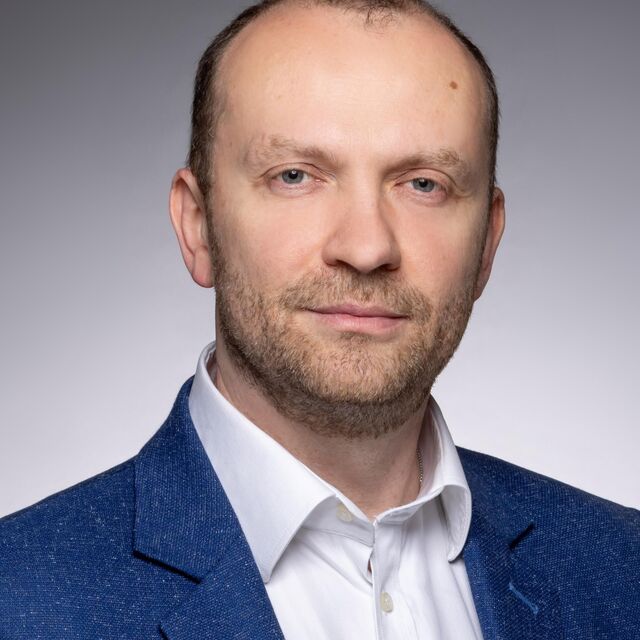
avatar for Jakub Stadnik

Jakub Stadnik

Senior Specialist for Sound Digitization and Restoration, National Film Archive – Audiovisual Institute (FINA)
Dr. Jakub Stadnik is a sound engineer specializing in film sound restoration. He is employed as a Senior Specialist for Sound Digitization and Restoration at the National Film Archive – Audiovisual Institute (FINA) and serves as an Assistant Professor at the Department of Sound... Read More →

3:30pm EEST

Objects of Governance: Indigenous Community Archives, State Intervention, and the Struggle for Autonomy
Tuesday October 20, 2026 3:30pm - 4:30pm EEST
Indigenous First Nation archives in remote Australian homeland communities can represent autonomy and renewal but also dependency and loss. The Australian federal government’s Emergency Response in 2007 intensified these tensions. Military intervention, together with the systematic defunding and restructuring of locally controlled organisations, challenged the information sovereignty underpinning the early development of Indigenous First Nation community archives. But the effects of this state-induced crisis on culturally significant audiovisual archives received little attention in either official evaluations, or archival scholarship. Drawing on critical archival studies and long-term fieldwork in Northern Territory communities, the paper contends that during a crisis, the true extent community archives govern their own historical records is revealed. If community archives become objects of governance rather than agents of their own documentary heritage, it reframes preservation projects as political technologies. For communities dedicated to autonomous archives, self-determination becomes a struggle against the competing archival logics.
Speakers
RL

Robert Lazarus

Senior Lecturer, University of Melbourne
Dr Robert Lazarus is Senior Lecturer in the Robert Cripps Institute for Cultural Conservation at the University of Melbourne. His work focuses on the documentation and conservation of cultural heritage. Current research explores diverse archival practices in Australia, especially... Read More →
Tuesday October 20, 2026 3:30pm - 4:30pm EEST
Statehood hall: Martynas Mažvydas National Library of Lithuania
  Long Presentation, In Person

4:00pm EEST

Celluloid Diplomacy: USIA Films, Propaganda, and the Making of Cold War Latin America
From 1953 to 1999, the United States Information Agency (USIA) produced or distributed approximately 20,000 motion pictures worldwide. Films focused on Latin America were designed to advance U.S. foreign policy objectives, promoting initiatives such as the Alliance for Progress, anticommunism, and modernization, while countering Soviet influence in the region. Intended primarily for international audiences, these films showcased U.S.-led development projects and encouraged cultural alignment with the United States, offering a counternarrative to the perceived threat of socialism and communism following the Cuban Revolution. Although often categorized as propaganda, USIA films encompass a wide range of subjects and employ diverse cinematic styles. Despite this breadth, cultural and political historians have devoted limited attention to the specific production practices and enduring legacies of this extensive body of work.

While some USIA films remain recognizable in different parts of the world, their visibility has long been constrained by a domestic distribution ban that was only lifted in 2013. More recently, the National Archives and Records Administration (NARA) in College Park, Maryland, has digitized a substantial corpus of USIA films along with extensive accompanying documentation. In the case of Latin America, this includes approximately 750 films covering presidential visits, diplomatic exchanges, U.S. aid programs, instructional campaigns, and sociopolitical representations. Physical 16 mm copies of these films are often dispersed across archives, universities, and cultural institutions throughout Latin America. The growing availability of digital access now creates new opportunities to examine the complex significance of these films, the conditions of their production, and their historical contexts. It also enables fresh interpretations at a moment when institutional stewardship—particularly at NARA—faces uncertainty and when shifting political climates call for renewed engagement with the legacies of the Cold War.
Speakers
avatar for Juana Suárez

Juana Suárez

Associate Professor/ MIAP Director, New York University
Juana Suárez combines careers as a scholar, film critic, and media archivist/preservation activist. Her research interests include Media Preservation, Film Archives, Media Archeology, Administration of Memory Institutions, Film Studies, Latin American/Latino-a Cinema, Cultural Studies... Read More →
 
IASA-BAAC 2026 Conference

From €70.00
Share Modal

Share this link via

Or copy link

Filter sessions
Apply filters to sessions.
Filtered by Date -